COMMUNITY SCHOOLS CONTINUE to make a big impact on students, educators and communities up and down the state. In addition to results showing marked improvement in student learning and well-being in just one year — as documented in a recent report by the Learning Policy Institute (see Resources box) — community schools and their shared decision-making model are effectively bringing together multiple interest-holders to chart the path to student success.
Through regular and meaningful discussion and assessment, interest-holders have equal voice and include students, families, community partners, district administrators — and educators. While each community school is unique, reflecting the needs of its students and families, CTA locals whose members teach and work in thriving community schools are seeing the value of shared governance and are bargaining community schools’ memorandums of understanding (MOUs) and language into contracts to ensure systems and structures stay in place.
“For Pittsburg Education Association, this was an important priority, as PEA sought a formal commitment from the management team to work collaboratively with educators as partners in the transformation of our schools,” says President Celia Medina-Owens. PEA had to fight for their MOU; the process took eight months and involved member actions and help from student families and community.
Community schools are supported by the California Community Schools Partnership Program (CCSPP), which has invested $4.1 billion statewide since its launch in 2021. As funding could expire in the next few years, the issue of sustainability of community schools looms large and makes it all the more important to codify in chapter contracts.
The path to the bargaining table looks different from local to local. Below are the unique stories of five CTA locals’ community schools journeys that led to the bargaining table, by five areas of focus:
1. Get informed and take the lead to chart your path.
2. Strategize and implement what works best for your local and each site.
3. Build member and other interest-holder support.
4. Negotiations: Take necessary actions, hold district accountable.
5. Sustaining community schools.
1. Get informed and take the lead to chart your path through trainings, other locals’ experience
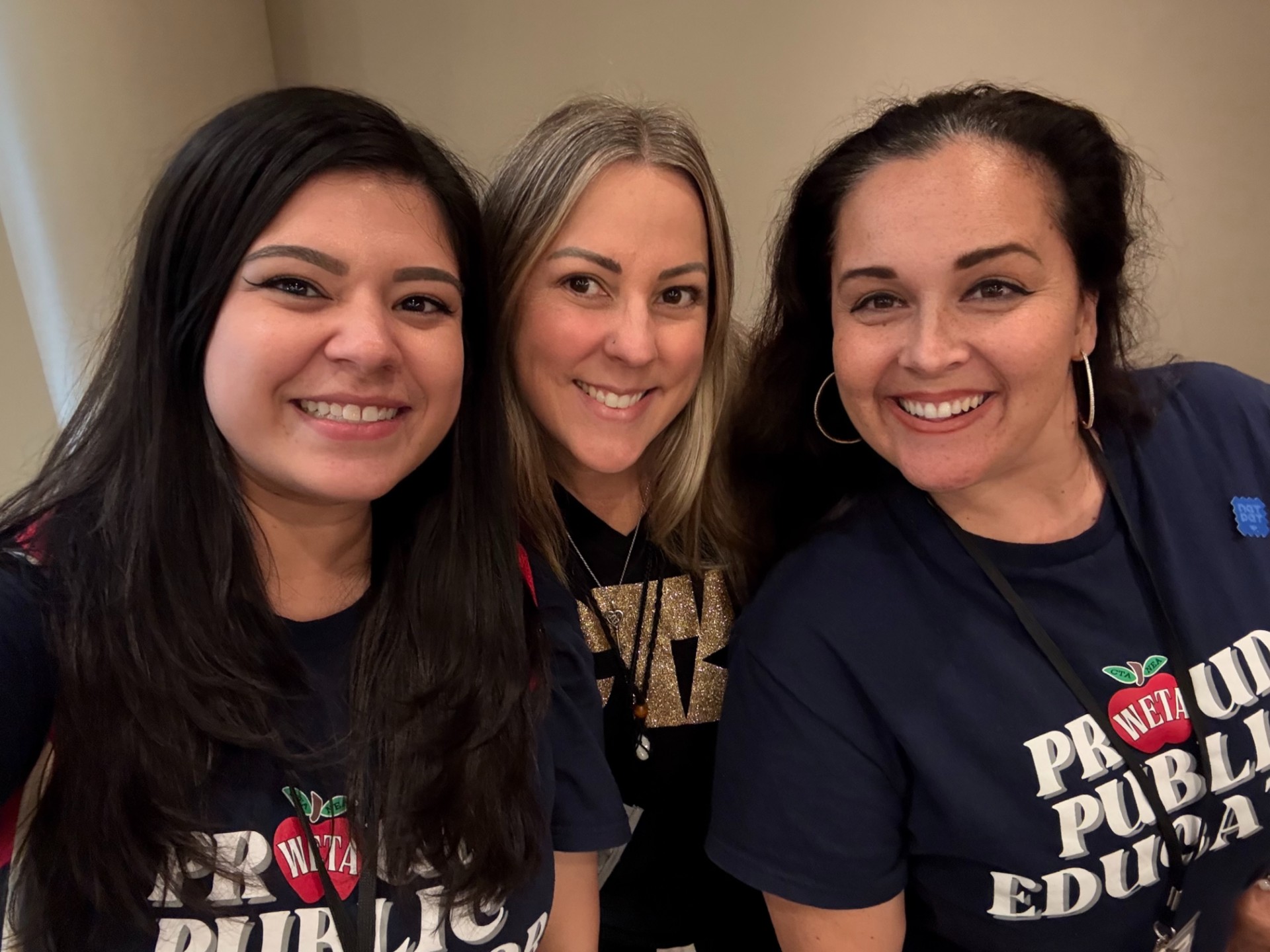
WETA Organizing Chair Allyson Banales-Pfeifer, President Julie McCarty and Human Rights and Equity Chair Alie Mercado.
Whittier Elementary Teachers Association, with 310 members, has a Community Schools MOU in place. Its K–8 district has 11–12 total sites (the virtual learning academy is separate). “We jumped in with eight community schools at once, two are middle schools,” recalls WETA President Julie McCarty. “We got a state Implementation grant in April 2022, but the first year we spent planning instead of implementing because this was all brand new to us.”
According to McCarty, WETA leadership with community schools stems from its ongoing participation in various CTA and NEA programs. “In summer of 2022, four of us went to CTA Summer Institute’s Community Schools strand not knowing anything. It completely changed our direction. We learned how to take the lead and make shared decision-making a sustainable model. We went back to the district with so much knowledge.
“The following CTA Summer Institutes we sent a large group of educators, including our program specialist and many of our site coordinators. We’ve held strategy sessions with CTA staff. We’ve learned from other locals. We hope to send another team this year to Summer Institute. We truly feel that this is one of the most valuable trainings offered for community schools.”
In addition, WETA has participated in
• The Community Schools strand at CTA Issues Conference (now CTA Organizing Academy).
• NEA’s Social & Racial Justice Conference.
• NEA’s Community Schools Benchmark Academy.
• A CTA social and racial justice workshop in Whittier, which included district administrators.
WETA has also sent different teams — including classified staff, who are community schools’ community liaisons — and district administrators to multiple sessions of NEA’s National Community Schools Learning Lab in Anaheim.
2. Strategize and implement what works best for your local and each site’s unique needs; use other locals’ MOUs or articles as models
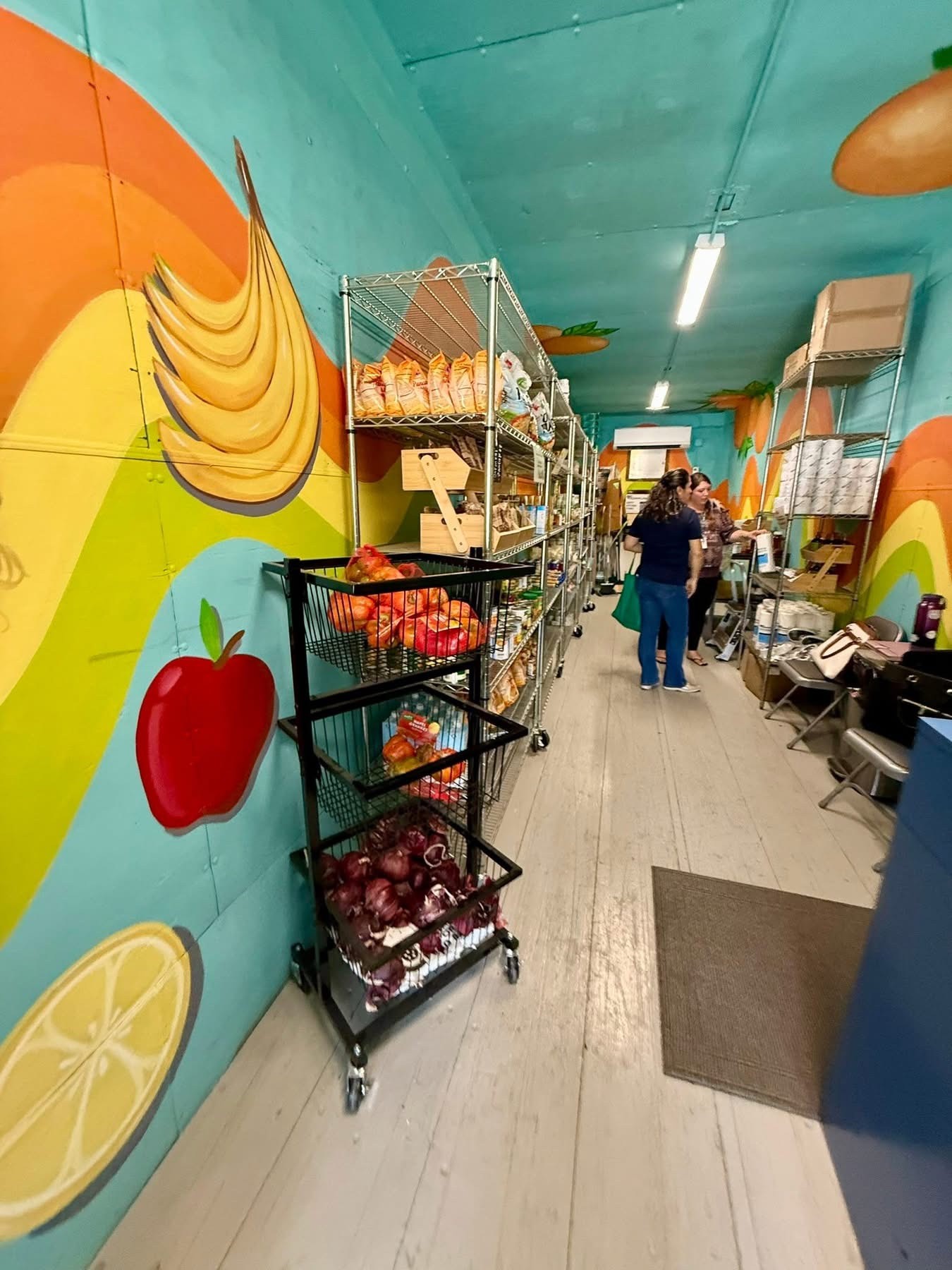
The Teague Elementary temperature-controlled food pantry.
The almost-900 members of Central Unified Teachers Association (CUTA) work in a school district just outside of Fresno. The district started with one community school, then added five more. “The first school is further along, with a food pantry in a temperature-controlled building, and a clothing closet,” says CUTA President Laura Bolton. “Some of our community schools are really rural, there are no community resources nearby, so they look different than those closer to
city areas.
“We achieved a signed Standard Operating Procedure (SOP) agreement on community schools with our district on Sept. 30, 2025. It is four pages and focuses on shared decision-making
and governance.
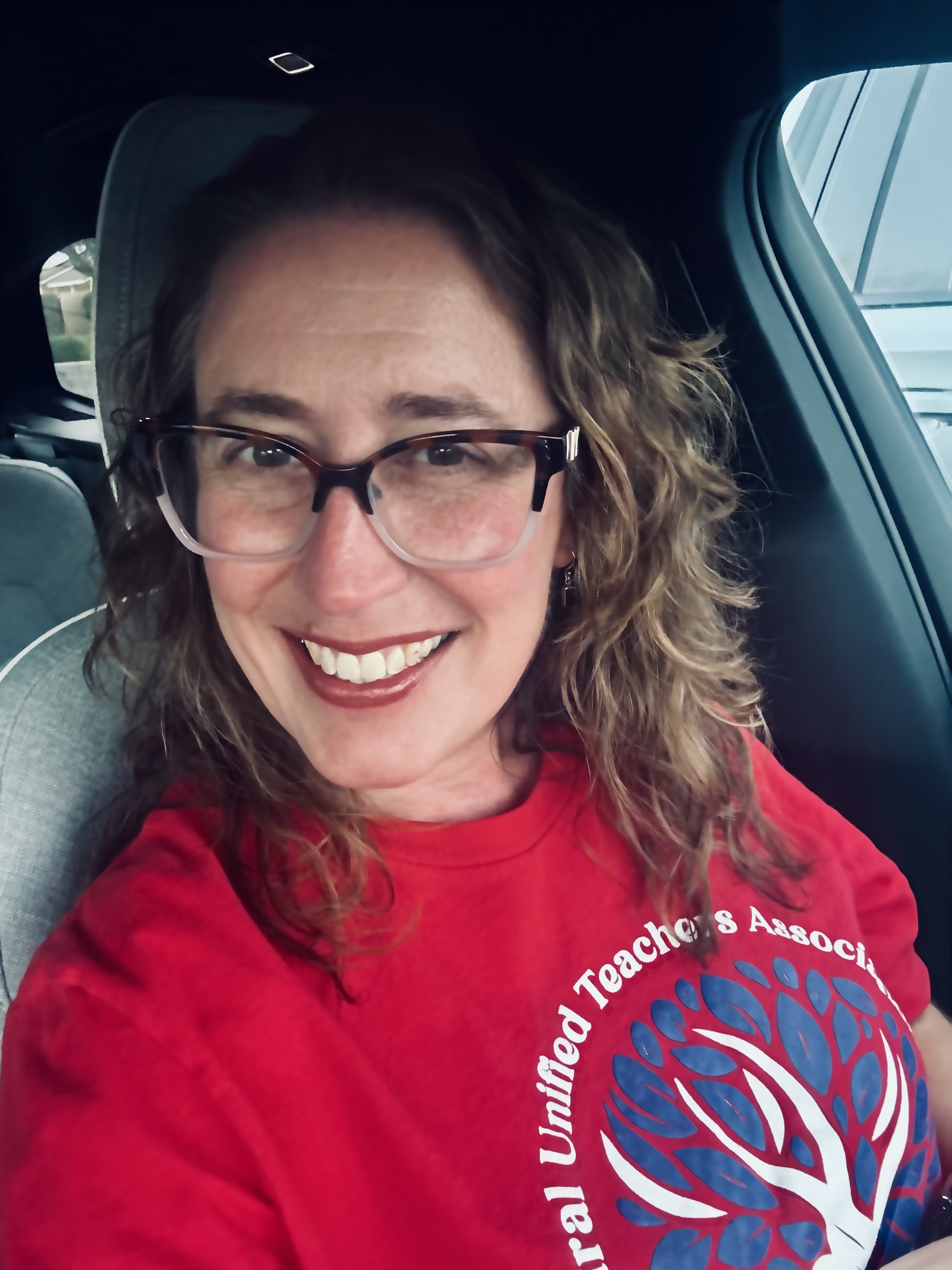
Laura Bolton
“We attempted to bargain for three years to get an MOU approved. We had a ton of turnover in the district office, with two superintendents and two interim superintendents, so there were a lot of stops and starts. We used a CTA template from one of the community schools trainings early on — essentially a demand to bargain.
“One superintendent was open to community schools and applied for state funds. CUTA had applied for an NEA community schools grant and was approved, and we used that for trainings. We started with one site, which already had a strong relationship with the community center and the church across the street. Now we have six sites — all with the SOP agreement in place.
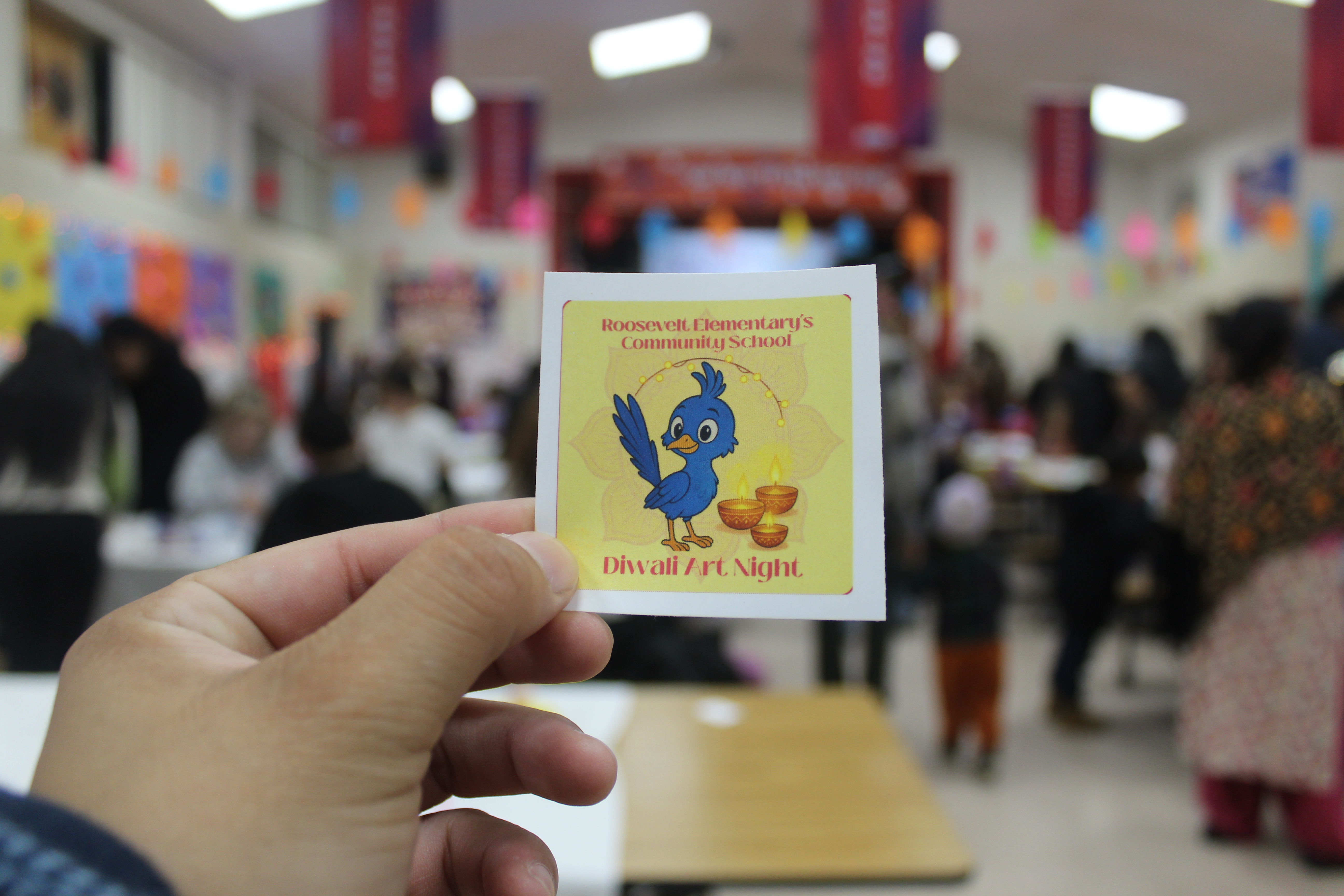
Roosevelt Elementary in Fresno celebrated Diwali Art Night as a community schools collaborative event.
“An assistant superintendent came up with the SOP idea, and we wrote it collaboratively for the community schools site leadership teams. We [also] started an SOP handbook — a how-to, with procedures in place.
“We put the SOP in the handbook and inserted a section that states it cannot be changed without the permission of CUTA or the community schools steering team. We signed the document so it’s binding and enforceable. And CUTA did not have to give up bargaining rights to put the agreement into the contract later.
“The SOP is accessible to the community, parents, students, etc. and in that way holds the district accountable.” CUTA’s leadership and work with the SOP also serves as an example that other locals can follow.
3. Build relationships with your members and other interest-holders (parents, community partners and district)

Chris Anderson
a. Stockton Teachers Association (STA) has 1,942 members and has been working on community schools since the CCSPP grants started in 2022. The Stockton school district received implementation grants for 20+ schools (out of 55 sites) in the first round. Additional schools were added in the next round for a total of 41 community schools — “and other schools are lined up,” says STA President Dr. Chris Anderson.
Sites that implemented community schools first have hired coordinators and are in the process of ensuring functioning steering committees. At the district level, the steering committee is meeting regularly and includes all labor interest-holders. The district is still working on getting parent and community groups engaged.
“Our school board passed a resolution supporting community schools, and STA is currently working on community schools contract language that matches what’s in the resolution.
“When I went to the first community schools steering committee for our district, I looked around the table and said, ‘Where is the rest of labor?’ We have nine different units in our district. Everybody needs to be a part of this; every unit and stakeholder needs to be represented.
“We had to educate everyone about community schools, so that they know the grant money is to pay for coordinators — who are not just extra office workers — and to build teams and work with parents. It’s about the site using the existing funds and community resources that they might not be taking advantage of. That is the needs and assets assessment: What are the needs at each school — a gym? Tutoring sessions? Classes for parents so they can support students in their learning? Food support? Medical support? There is no one answer for all sites.
“With a shared leadership model, these are the cookies on the plate, so how do we use them? The funding will be gone in five-to-seven years. We frontload what we want and need and then taper it down, so at the end, it’s part of your school plan.”
b. United Teachers of Richmond (UTR), with approximately 1,500 members, was among the first locals in the state to bargain community schools language into its contract. Even before that, UTR worked with interest-holders to ensure multiple voices were captured: The local, its district and several community partners worked on the CCSPP application together and after funding was received, all three parties worked on language that was codified in a contract article in the 2022–23 school year. The article expires in 2031.
“Some district officials didn’t understand why this had to be in the contract, since we were in agreement,” says Cathy Baker, UTR’s Elementary Director currently on special assignment as an NEA/CTA Community Schools support specialist. “An assistant superintendent who felt this way at the time recently told me, ‘Now I get it.’”
UTR’s contract article has served as a model for other locals. “It stipulates that each community schools site must have a community schools director — a full-time, paid position that is open to all, including educators, district staff and community partners.”
Baker notes that many UTR members serve as community schools teacher leads, positions that offer educators stipends and time while they continue to teach.
Almost 30 of 54 sites in West Contra Costa are community schools, a mix of elementary, middle and high schools. UTR is currently starting to address the sustainability of community schools, engaging the district and community partners in discussion.
4. Negotiations: Take necessary actions, hold district accountable
a. Pittsburg Education Association (PEA) boasts 98% union membership, with 604 members. All 13 schools in its district are community schools. Nine schools have CCSPP grant money; four are funded through their Local Control and Accountability Plan (LCAP) process.

Food distribution at a Pittsburg community school.
Pittsburg schools and students have seen impressive gains in literacy, math and science assessment scores following adoption of the community schools model, and were honored for their accomplishments in October at a press event by State Superintendent of Schools Tony Thurmond.
“We bargained CS language in an MOU and got it signed on April 11, 2024,” says PEA President Medina-Owens. “Now we’re focused on implementation and enforcement.”
“It took eight months to get the MOU signed. Our district had passed a resolution making a commitment to community schools, but management was hesitant to sign a binding document because of the shared leadership component. PEA had to take actions — we rallied; we spoke to the school board and brought in families, community and educators to speak.
“We also continued to work with the management team to educate them on community schools — what they are, how we and they envisioned them and our goals to change the systems.
Celia Medina-Owens
“We held meetings with them and CTA and NEA. We were moving at the speed of trust. We borrowed language from Natomas Teachers Association for our MOU and reached out to Natomas again for their revised MOU.
“We had a lot of challenges, and we continue to have challenges and work through them. We now have a working relationship with the district.”
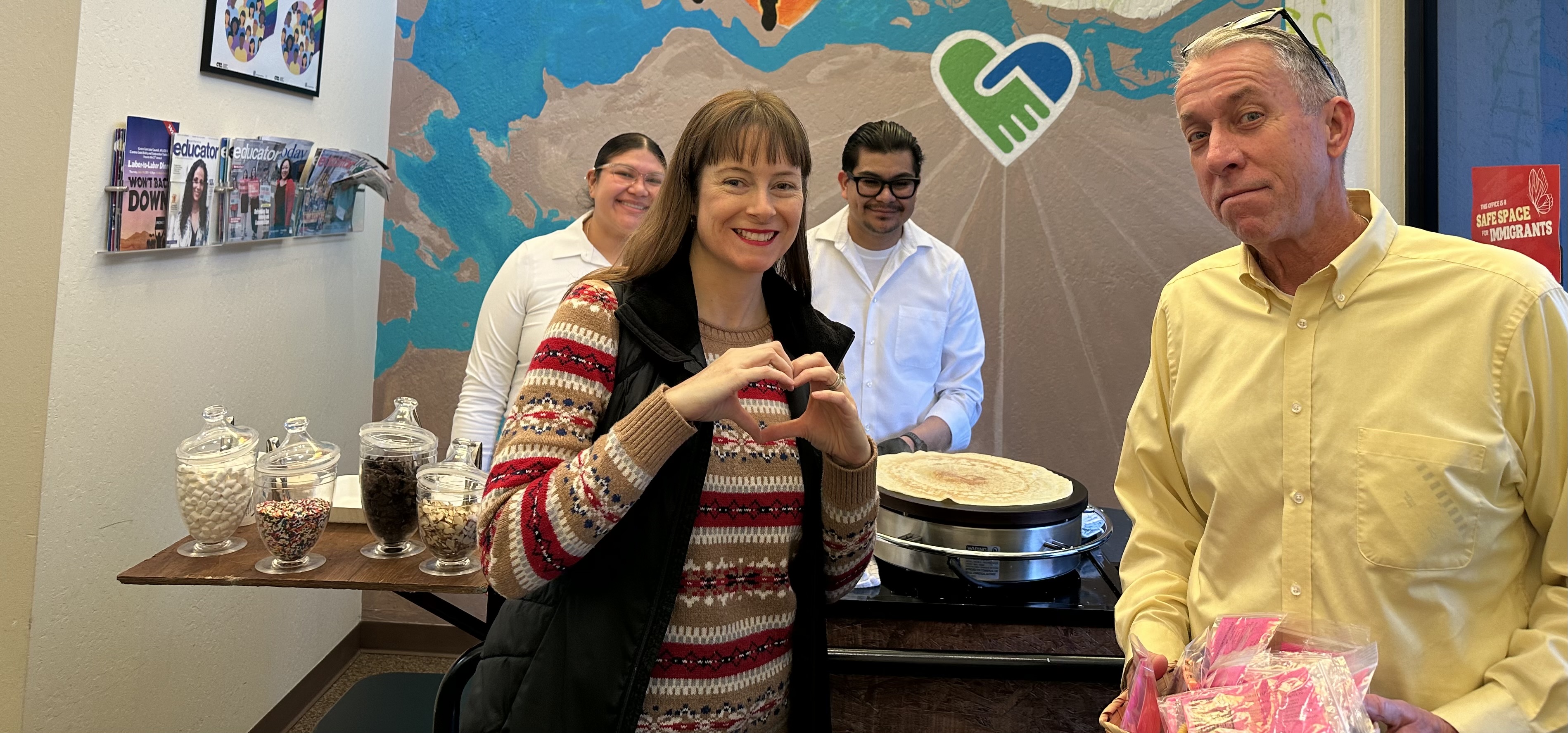
In mid-January, PEA and neighboring Antioch Education Association sponsored a Crepes & Community Schools event; attendees played community schools-themed bingo based on CCSPP grant language.
At the October press event, Medina-Owens attributed community schools’ shared governance for their success. “We know that when educators and support staff are empowered to collaborate with school and district leadership, we can focus on the students and their individual needs and everyone thrives.”
b. Whittier Elementary Teachers Association (WETA) bargained its first Community Schools MOU in 2023.
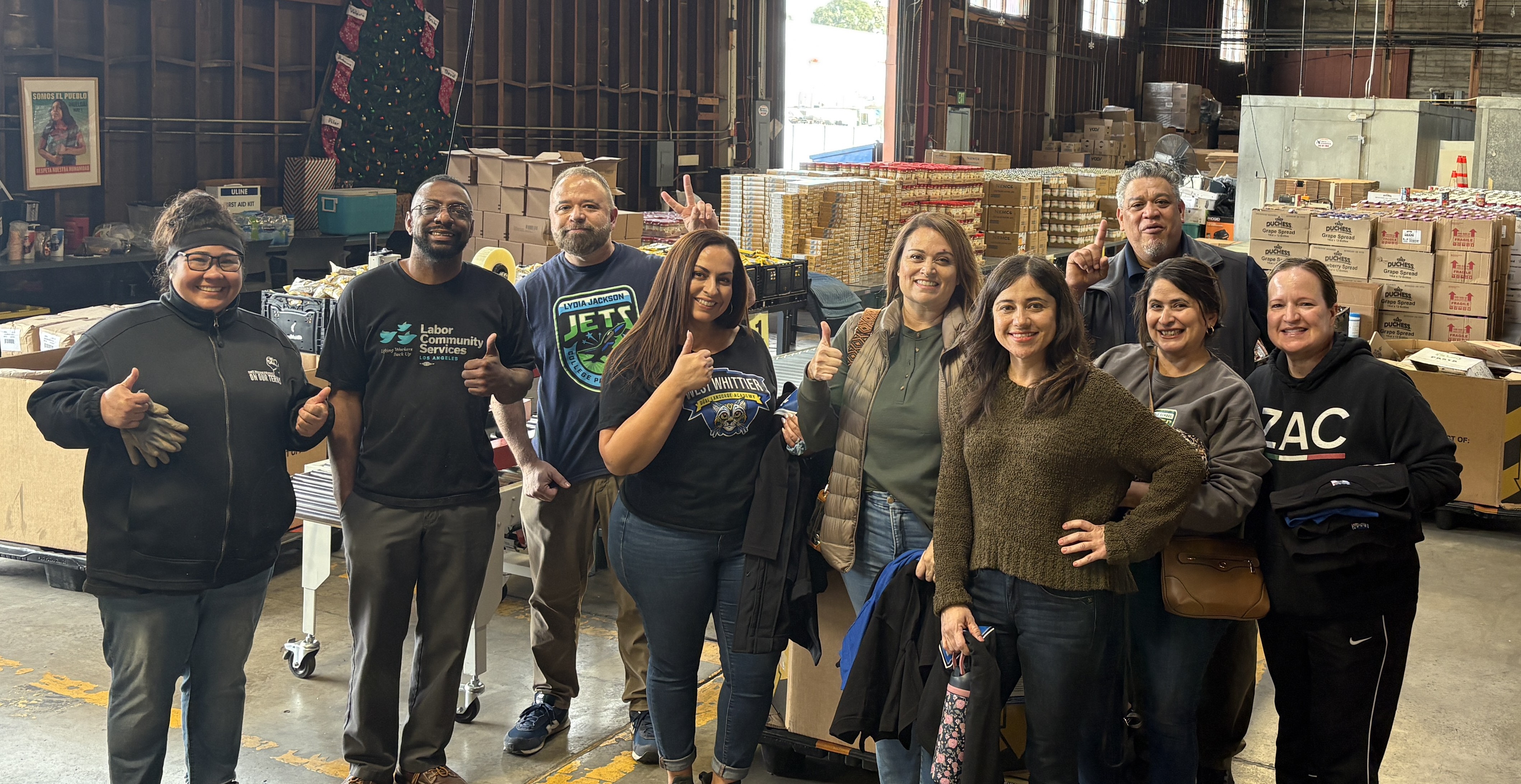
Community Schools teams in Whittier packing up boxes of food to get ready for food distributions.
“When we first went to the district about community schools, we were shut down,” says WETA President Julie McCarty. “We kept pushing them, inundating them with info about the state grants and community schools. [Admin finally applied for a grant,] then our superintendent and SpEd director told us that we’d received $10.4 million over five years. It was an exciting moment.
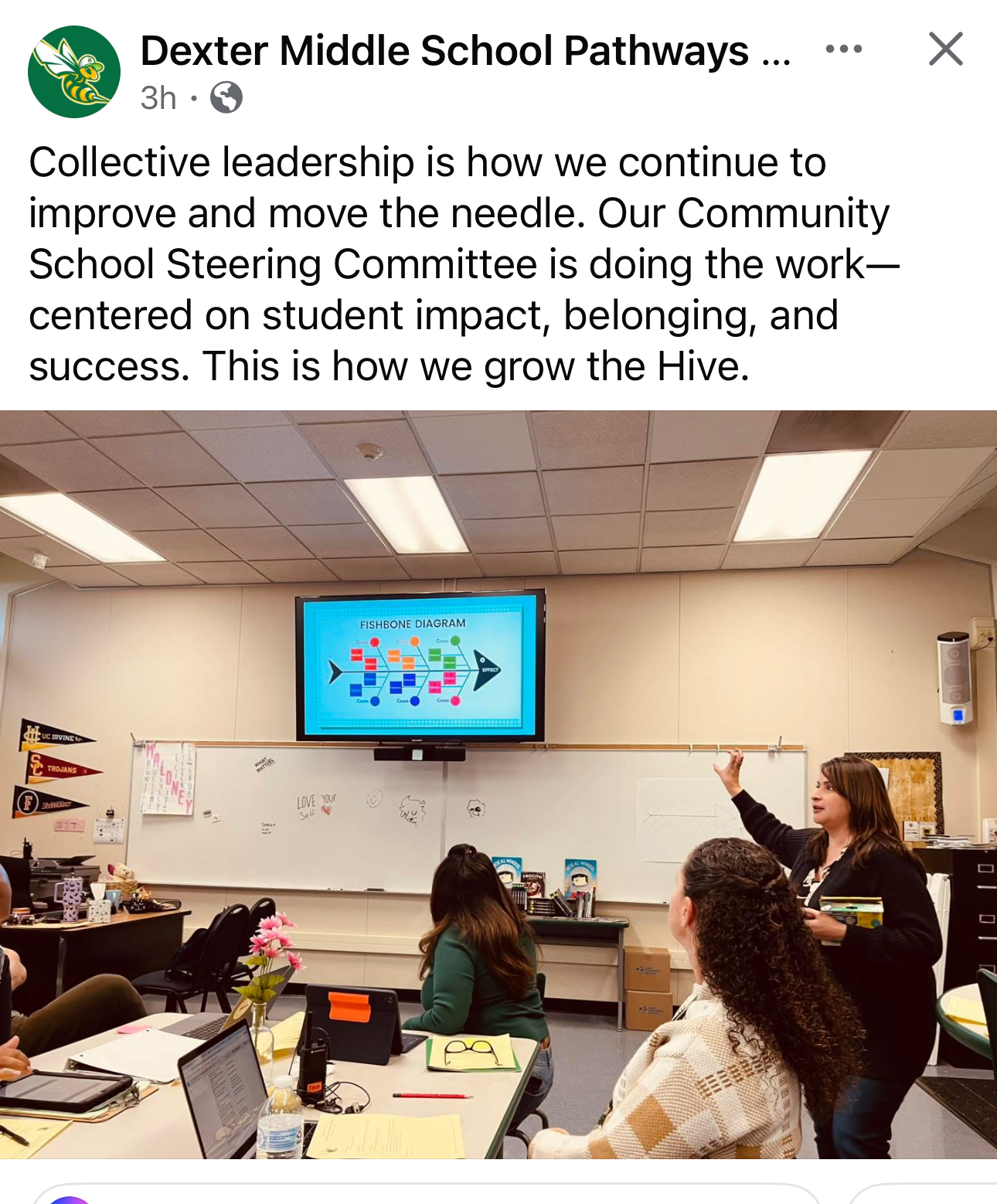
A Dexter Middle School (Whittier) post about its community schools steering committee.
“But the district had problems with shared governance, shared decision-making and how to spend the money. It was hard to get our superintendent to go to anything — he went to the Anaheim Learning Lab but didn’t stay the whole time, same at steering committee meetings. School board members attended, including one who was opposed to community schools; the Lab opened her eyes. WETA had to keep updating the board on the value of community schools.
“During MOU negotiations, we really had to fight. It was not a pleasant environment. The turning point was having CTA staff with WETA meeting with the district’s team. We were able to turn things around in our favor, with strong language that Montebello and Alhambra locals had used, for our MOU. For example, our language specified that community school site coordinators could not be used for other jobs.”
5. Sustaining community schools’ practices and relationships
a. Pittsburg Education Association President Celia Medina-Owens says, “We’re looking at the sustainability of community schools practices that we are implementing, meaning will we continue these practices when the funding runs out? Our vision is to change systems within our schools, even without state funding, so the services we provide are sustainable.
“At our one comprehensive high school — with 167 PEA educators and 3000+ students — a sustainable practice is the community closet where families can get food and clothing; it’s a hub for families to support literacy and treat anxiety. This is not funded by grants — we use LCAP funds. Other community schools use grant money to provide glasses to students, so we have to think how to continue this service.”
b. Anaheim Secondary Teachers Association
(ASTA) has been at the forefront of the community schools movement in California for years — so much so that the NEA-funded National Community Schools Learning Lab is run through ASTA in collaboration with the Anaheim Union High School District. (NCSLL hosts CTA locals and community schools teams from around the country in multi-day trainings.) Currently, three-fourths of district schools are community schools; plans to transition the rest to community schools in the next year, funded by the district, are underway.
ASTA, with 1,125 members, secured its community schools MOU in January 2023. “The MOU will last the length of the [five-year] CCSPP grant,” says ASTA President Geoff Morganstern. “We also are working to extend to year six of the grant with our existing funds so the sustainability discussion will be for the 2027–28 school year. We’ll then recommend that we update the MOU once all interest-holders collaboratively decide what sustainability will look like.”
For the MOU, ASTA and the district formed a subcommittee of the community schools steering committee to make language recommendations for both parties to consider at the bargaining table.
“Contract bargaining is historically between the union and the district. We pitched the subcommittee idea to the district in the spirit of community schools and collaborative leadership — to use the community schools process to create collective bargaining. This also helps build parent and community relationships, as we are not excluding them from something so central.
ASTA’s relationship with the district as a result of community schools work helps both parties get through tough challenges, as with the 2023–24 layoff fight. The work also strengthens family and community support for ASTA’s goals.
“We use our contacts and relationships to build support. We were very successful in fighting layoffs by engaging our community, and now through the We Can’t Wait (WCW) campaign. After talks with ASTA and the district, the school board passed a resolution supporting WCW. [Relationships] help us get further down the road because the board and community are familiar with and generally supportive of the goals.”
CTA & Community Schools
Our union is committed to helping grow and support California community schools, in partnership with the state, school districts, students, families and communities. Read more of our coverage of our union’s work and find resources at cta.org/communityschools.
View our new community schools videos! Visit youtube.com/Californiateachers to watch our new short videos that convey information and thoughts about community schools from a community schools coordinator, students and a parent.
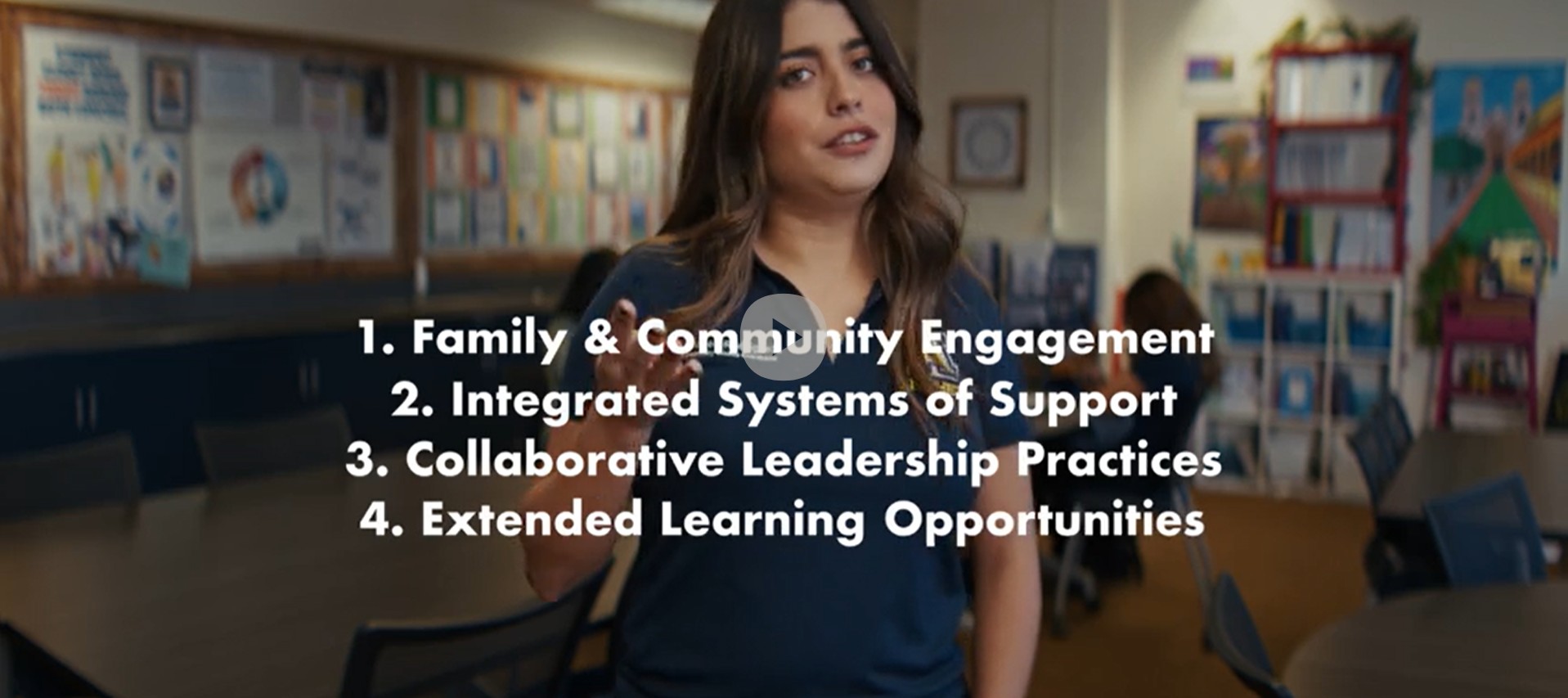
Screenshot from a new CTA video showing the four pillars of community schools.
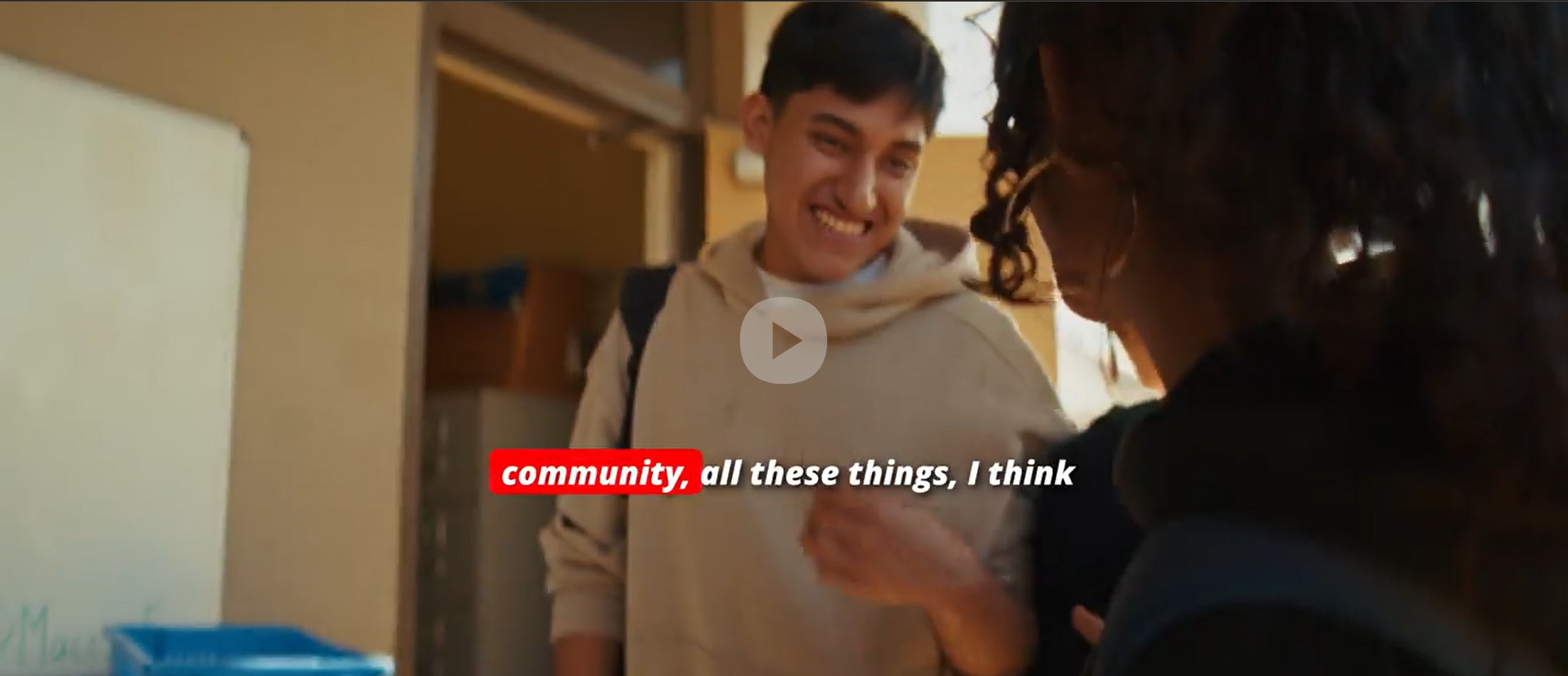
A scene from an Anaheim community school video, one of several new videos produced by CTA.
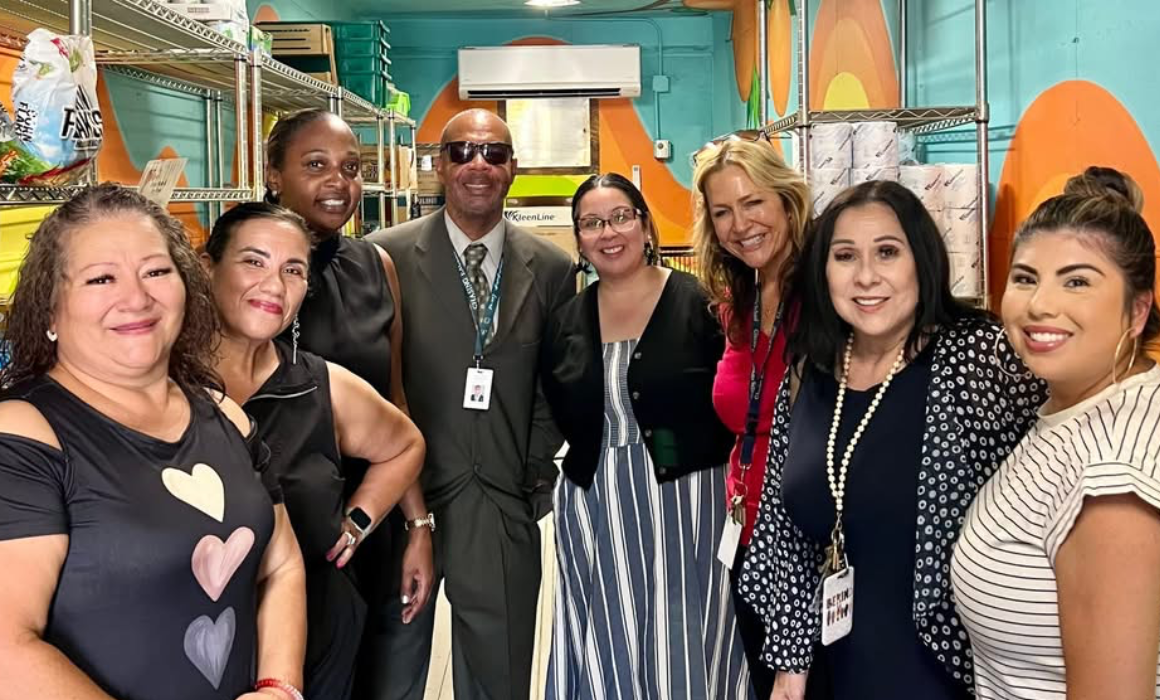
Top photo caption: Far right: Central Unified Teachers Assn. members Alex Mejia, community schools
site committee member, and to her right Judee Martinez, Teague community schools site coordinator and CUTA bargaining advisory team for community schools member. Others pictured: Betty Barajas, Teague classified community schools member (far left), school/district administrators and a community partner.
The Discussion 0 comments Post a Comment