In a victory for public schools and students, the Monterey County Office of Education (MCOE) denied an application by Navigator Schools for a series of K–12 charter schools throughout Monterey County. The MCOE board cited potential negative impacts on existing public school programs and services that could be harmful to current students as the primary concern.
Navigator, a charter school network run by business and corporate heavyweights, operates four campuses in California and received a $12 million grant from the Trump administration to expand.
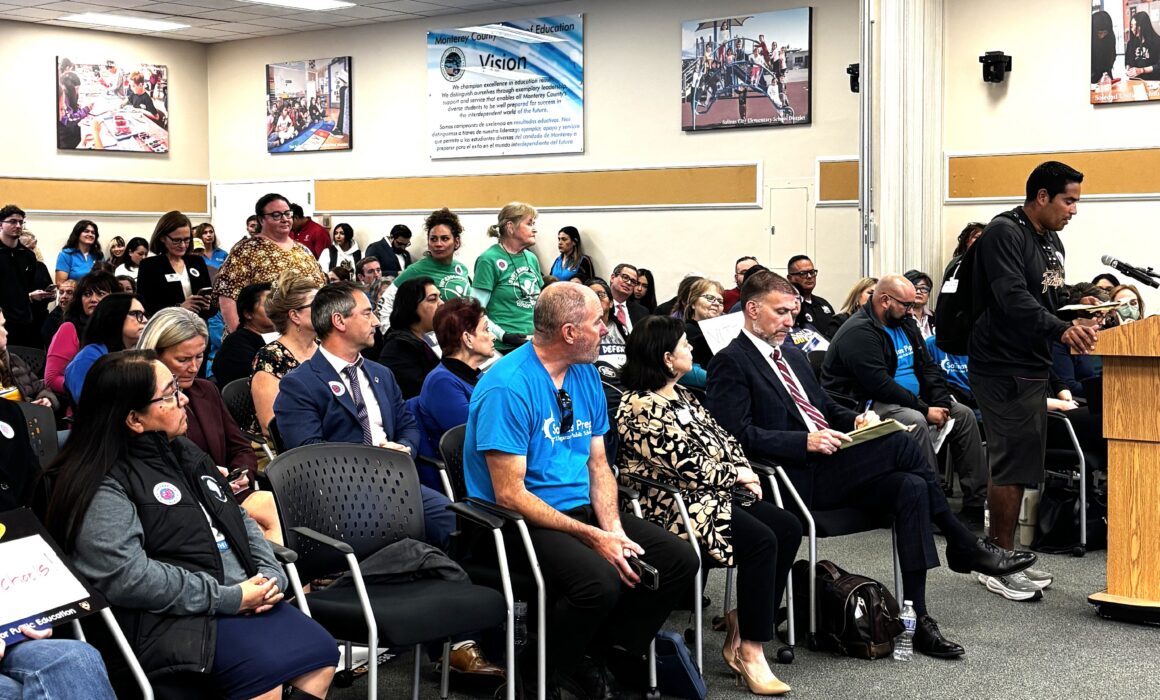
Educators, administrators, parents, students, labor allies, community members from multiple county districts and local charter school leaders and educators packed the MCOE Board of Education meeting in mid-January to voice their opposition to the proposed charter. Speakers told the board that by fracturing educational resources, the proposed charter would lead to “reductions in staffing, programs and essential student supports” and undermine the stability and quality of education in districts across the county, especially for the most vulnerable students.
The board voted 6-1 against the charter. One trustee said, “the people have spoken.”
 “This victory means more stability for our students,” said Monterey Bay Teachers Association (MBTA) President Rosalyn Book, who with a coalition of local leaders and community allies led the charge against the charter. “Our district alone had estimated that if the charter school was approved, then 120 employees and $9–$10 million would be cut from our budget. Now students have stability with teachers and school services.”
Protecting the most vulnerable
Oscar Ramos, president of the Salinas Elementary Teachers Council (SETC), noted that the charter school would harm the most vulnerable students in the county.
“My main concern is that I work with migrant families, and [charter proponents] failed to propose anything significant that’s going to support migrant students,” Ramos told a KSBW reporter. An MCOE staff report raised this issue as well, finding virtually no mention of migrant students in the petition for a county with one of the highest populations of migrant students in California.
“Our district alone estimated that if the charter school was approved, then 120 employees and $9–$10 million would be cut from our budget. Now students have stability with teachers and school services.”
—MBTA President Rosalyn Book
The MCOE report further identified similar concerns about funding and meeting the needs of vulnerable students, including migrant and indigenous students. It cited these issues and other unmet requirements in Navigator’s application.
The proposed charter school would have three locations in the county — Salinas, Seaside/Marina and Soledad/Greenfield. The MCOE report found that the application did not reflect a plan responsive to the needs of Monterey County communities and did not contain evidence of local community support. MCOE staff highlighted that the petition was largely the same as a petition recently approved by the Orange County Board of Education, and proposed programs duplicative of what was already offered by district programs in Monterey.
Locals lead opposition campaign
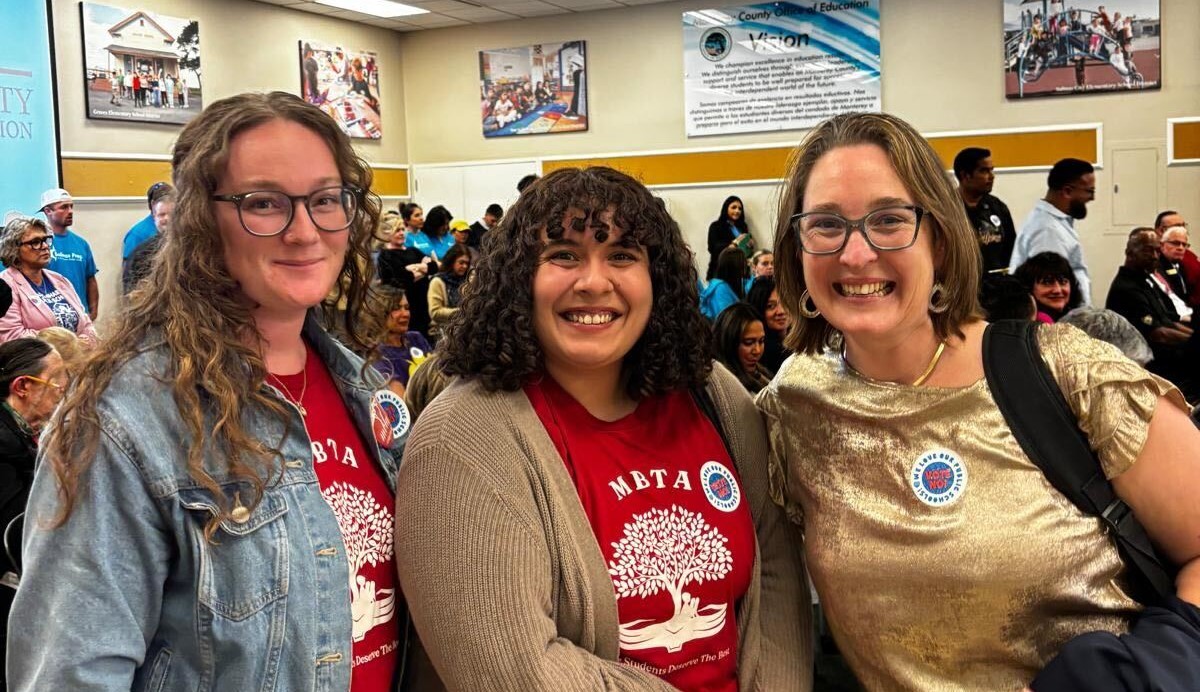
Left to right: MBTA members Brooke DiPaolo and Clarissa Murillo with Wendy Root Askew, Monterey County Board of Supervisors, District 4.
Area locals first heard about the proposed charter school on Dec. 3, 2025. MBTA, SETC and Alisal Teachers Association quickly formed a committee to coordinate the campaign to fight back against Navigator. The committee included other locals, parents, community and labor allies (including local CSEA and CFT chapters and the Monterey Bay Central Labor Council), local elected officials and district administrators. Because of end-of-year activities and holiday breaks, the time for action was limited and organizers had to work fast before the MCOE board meeting on Jan. 14.
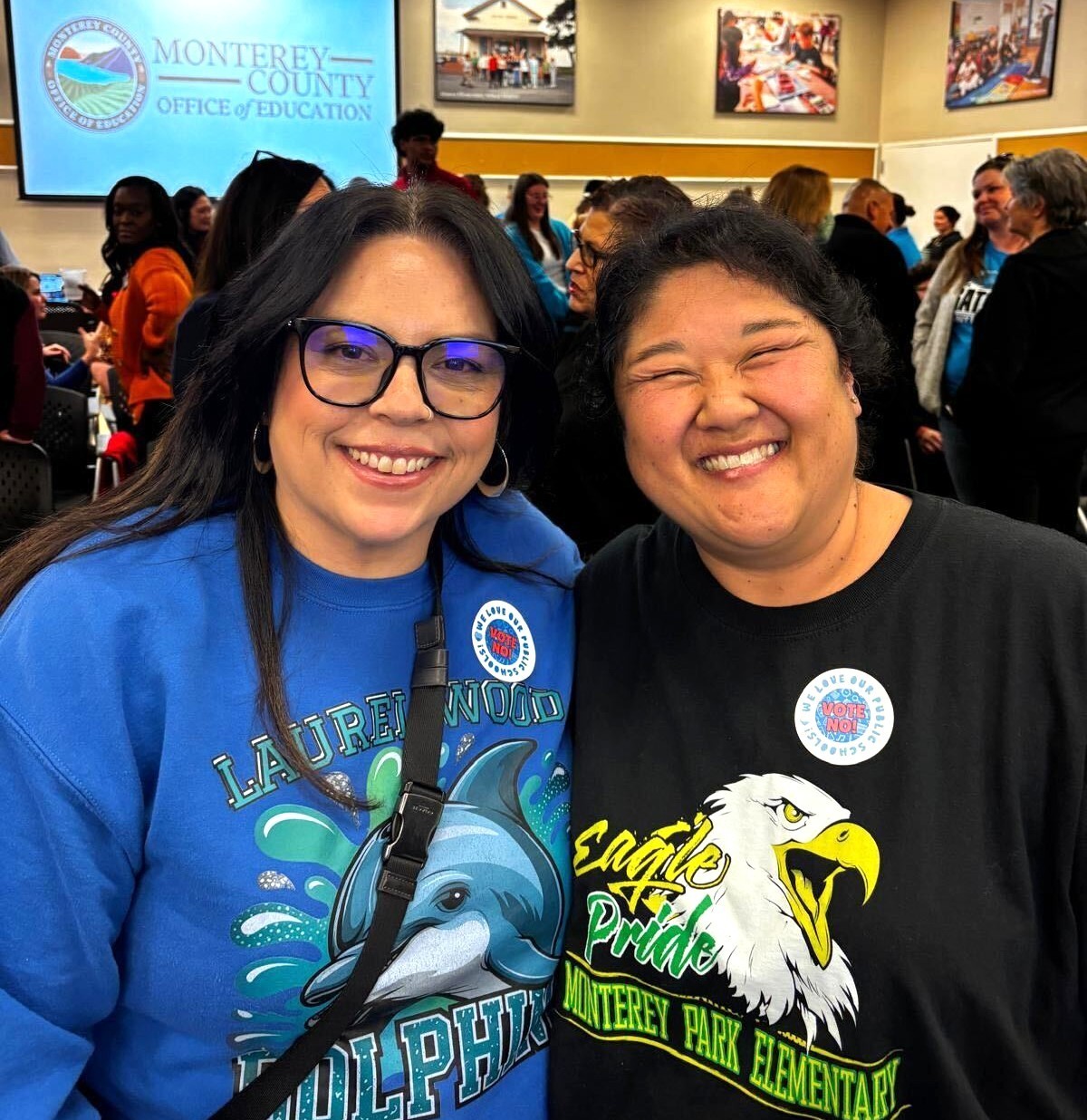
SETC members Veronica Espinosa and Tiffany Kellogg rep their public schools.
“It was a huge collective effort,” said Book, who is also chair of the Central Coast Counties Service Center Council. “We divided and conquered. We held one-on-ones with county board members and the MCOE superintendent of schools. We created a petition on Friday night at 5:30 for the board meeting the following Wednesday and managed to get 2,100 signatures. We used social media, and our connections to community leaders. Everything had to be very quick. “It was a real lesson in strategic boots-on-the ground organizing. We had to be flexible day by day, hour by hour. On the day of the board meeting, we learned that Navigator was coming early — busing in their teachers, students and parents (many were Navigator employees with children in their charters). So we had to tell our folks to get there sooner — and we had so many people that many were put in an overflow room.”
The overwhelming support for existing schools and their students resulted in the board voting to reject the charter proposal, emphasizing in its decision the need to use every resource to support existing neighborhood schools.
The decisive win protects existing local schools from financial instability and program cuts, and proves that strong organizing can beat big money.
Charter Schools Increasingly Turn to Counties for Approvals
Countywide charter petitions, once rare, have been increasingly used by the charter industry in an effort to bypass critical reforms contained in AB1505, passed in 2019 with significant effort from CTA members and our allies.
Under AB1505, Districts can now consider the impact of a new or expanding charter on all students in the district, taking into account whether a new charter would cause a negative impact on existing programs and services and/or if they already offer a similar program that serves the same community.
By submitting petitions directly to the county, charter operators can bypass districts altogether. Our union, along with education and labor allies, has been vigilant in protecting students and public education against unrestricted charter expansion at both district and county levels.



The Discussion 0 comments Post a Comment