-
- Click to print
- Share this page on Pintrest
- Share this page on Facebook
- Share this page on Twitter
Suicide Prevention and Response
No loss is easy, nor does grief ever truly end. We hope these resources can help you in your time of need, whether you are grieving or supporting survivors of suicide, wanting to prevent suicide of children and adults, or both.
On this page
Back to topSuicide Prevention
The QPR Institute provides online and in-person training for Suicide Recognition and Prevention through their evidence-based programs.
The Centre for Suicide Prevention is a resource for communities to create their own suicide prevention plans.
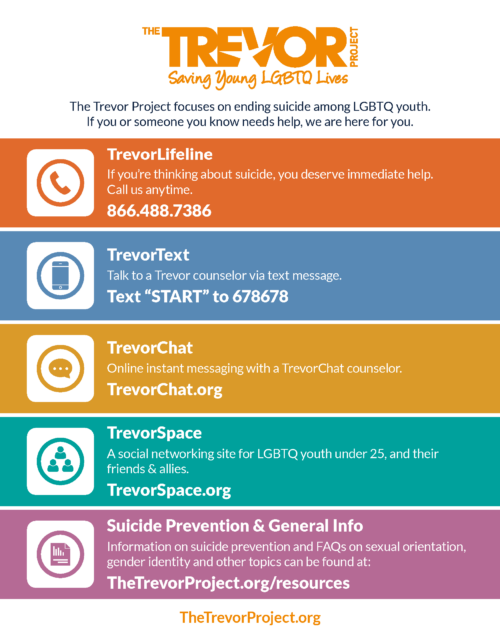
The Trevor Project has resources for talking about suicide with LGBTQ+ youth.
Suicide Response and Postvention
Communication & Memorial Guidance
The death of a student by suicide can have a profound impact across an entire school community. Union presidents may find themselves supporting grieving educators while also communicating with members, collaborating with administrators, and responding to questions about memorials and school activities.
The goal of suicide postvention is to support those who are grieving, reduce additional harm, and promote healing while minimizing the risk of suicide contagion.
Union leaders are not expected to serve as mental health professionals or determine the circumstances surrounding a student’s death. Their role is primarily to:
- Support affected educators and school employees.
- Advocate for adequate time, staffing, and mental health resources.
- Help ensure employees receive accurate and consistent information.
- Encourage trauma- and grief-informed responses.
- Coordinate with district/school crisis-response personnel.
- Help members understand appropriate communication with students.
- Advocate for safe memorial practices.
- Recognize that staff members may also be grieving or experiencing trauma reactions.
Whenever possible, communication should be coordinated with the school’s designated crisis/postvention team.
Acknowledge the death and the grief
Avoid pretending the death did not occur. Students and staff need opportunities to acknowledge the loss and receive support.
Communication can recognize:
- the student’s life and importance to the community;
- the sadness and grief people may be experiencing;
- that people respond to death differently;
- where students and employees can obtain support.
Avoid sensationalizing or romanticizing the death
Communications should not portray suicide as heroic, peaceful, inevitable, or as a meaningful solution to suffering.
Avoid language suggesting that the student:
- “is finally at peace”;
- “is in a better place because they chose to leave”;
- “couldn’t take it anymore”;
- “died for” a particular cause;
- will be remembered primarily because of the manner of death.
The student should be remembered as a whole person rather than through the circumstances of their death.
Avoid details about the method
School and union communications generally should not include:
- the method of suicide;
- the location or specific circumstances;
- descriptions of the scene;
- photographs or imagery connected to the method.
Unnecessary detail can increase identification with the death and contribute to contagion risk.
Avoid assigning a single cause
Suicide is complex. Avoid statements such as:
“This happened because of bullying.”
“It was because of a breakup.”
“Academic pressure caused this.”
Even when a particular stressor was present, suicide generally cannot responsibly be attributed to one event or circumstance.
Educators do not need to have perfect words or provide counseling.
Appropriate communication can:
- acknowledge that something very difficult has happened;
- allow students to express feelings without forcing discussion;
- recognize that grief responses vary;
- maintain predictable routines where possible;
- remind students that support is available;
- refer students expressing significant distress to appropriate school professionals.
What educators should understand:
- Mimimize the romanticization and sensationalism of the suicide.
- Minimize repeated conversations about the details of the event.
- Death by suicide can cause both grief AND trauma responses.
- Suicide is complex. Avoid oversimplification and simplistic causal explanations.
- Allow students to talk about their feelings and provide opportunities through dialogue, art, written expression, speech, music, etc.
Honor the student without inadvertently glorifying the manner of death.
Consider memorials that are:
- consistent with how the school recognizes students who die from other causes;
- time-limited rather than permanent;
- focused on the student’s life rather than suicide;
- inclusive of different grieving styles and cultural lenses;
- developed in consultation with the family and school crisis team.
Examples might include:
- condolence cards or memory books for the family;
- opportunities for students to share memories;
- participation in an existing community service activity;
- temporary spaces for reflection;
- activities focused broadly on kindness, connection, or community.
Memorial Practices Requiring Caution
Schools should be especially thoughtful about:
- permanent memorials dedicated specifically to a suicide;
- dedicating buildings, classrooms, benches, athletic facilities, or major events specifically because the student died by suicide;
- large public displays that remain indefinitely;
- assemblies centered primarily on the student’s suicide;
- extensive social media campaigns focused on the circumstances of the death;
- displaying photographs or objects associated with the death;
- language portraying suicide as courageous, romantic, or spiritually transformative.
The concern is not that the student should be forgotten.
The concern is that highly visible or permanent memorialization can unintentionally communicate to vulnerable students that suicide results in extraordinary recognition or elevated social status.
How would our school respond if this student had died from another cause?
Policies regarding memorials should ideally apply consistently to deaths from suicide, illness, accidents, violence, and other causes.
Consistency allows schools to honor students compassionately without singling out suicide for either extraordinary recognition or silence.
Social Media Changes the Postvention Environment
Students may learn about the death through social media before official school communication occurs.
Union and school leaders should anticipate:
- rumors and misinformation;
- photographs or details being shared;
- spontaneous online memorials;
- romanticized posts;
- speculation about why the student died.
Schools cannot control students’ personal social media activity, but educators can model responsible communication and encourage students not to share graphic details, rumors, or speculation.
Supporting Staff
Union leaders should advocate for:
- employee assistance and counseling resources;
- access to grief and mental health support;
- substitutes or coverage when educators need time away;
- flexibility following the death;
- opportunities for staff debriefing and connection;
- additional support for employees who had a close relationship with the student;
- support for employees responsible for helping grieving students.
Some educators may experience grief, guilt, intrusive thoughts, trauma responses, or questions about whether they missed warning signs.
Union leaders can reinforce that staff members do not have to process the experience alone.
Coming Soon