CTA IFT Mission Statement:
The CTA Institute for Teaching mission is to enhance, support and sustain high-quality teaching and high-quality public schools for all California students. Through mobilizing teachers, special programs, research, conferences, networking, and community-based coalitions, the CTA Institute for Teaching seeks to advance public education and promote the common good of our students and communities.

IFT Grants
IFT helps all students and schools by awarding grants directly to CTA members and local chapters. To date, CTA members have funded 501 grant projects totaling more than $5.8 million. All CTA members are eligible to apply for an Educator grant (up to $5,000) or an Impact grant (up to $20,000).
Congratulations to our 48 awarded IFT Grant Recipients for this upcoming school year!
The IFT online Booking Site is open!
Start scheduling your grant Project Coordinator Group Check-Ins, Project Coordinator One-on-Ones or office hours today.
IFT Grant Project Coordinator Check-In Available Dates for 2022:
December 1, 2022
December 8, 2022
The Institute for Teaching (IFT) is attempting to bring a new approach to school change. Based on its’ work in California schools, with foundations and from discussions with hundreds of practitioners and students, the IFT has determined that school change must include two key factors:
- It needs to be teacher driven.
- It should be based on what is working and successful in our schools and classrooms.
By focusing on what works in our schools, the IFT believes strength-based models for school change add a new dimension to school improvement. Strength-based models provide an asset-based approach that teachers can use to emphasize talents over weaknesses and strengths over deficits to create a learning environment that supports and encourages every student to do their best.
In the beginning, the public education system involved people who dedicated themselves to their students in one-room schools or to small groups who met to learn how to read and write, how to reason and recite, and how to think and invent. Whether studying Aristotle or Plato, Latin or Greek—or how to plow a straight furrow or cook a simple meal—students came to school to seek new knowledge and new ways to live and work. They still do.
Today’s schools have grown beyond one-room schools to become large institutions. Sometimes they are overcrowded, often under-funded, but thousands of students and teachers are succeeding every day in learning, achieving and progressing. The relationship that matters most in our schools today is the same that existed in those one-room schoolhouses: the relationship between teachers and students.
The CTA Institute for Teaching exists to support that relationship, to bolster its influence and provide an environment where these nurtured relationships can foster meaningful learning. IFT inspires the efforts of teachers and stakeholders to hold open the door for learning to take place. IFT facilitates new ways to encourage teachers to work together with others in the community to hold the space for revitalization of public education and a renewal of its commitment to excellence, allowing each and every student to achieve their goals.
The Institute was formed in 1967 by the CTA Board of Directors and established as a foundation—a 501(c)(3) corporation—to assist public education in ways that CTA alone was unable to address. Since 2002, IFT has come under the umbrella of the CTA Foundation for Teaching and Learning, an independent nonprofit organization that supports CTA sponsored scholarships, awards, grants and disaster relief supporting teachers and students across California.
IFT discovered a new sense of optimism and accomplishment when teachers were empowered to describe and define what makes the teaching and learning process most successful. As a result, IFT is now helping chapters and members become experts on solutions, as they begin to change policy at the local level.
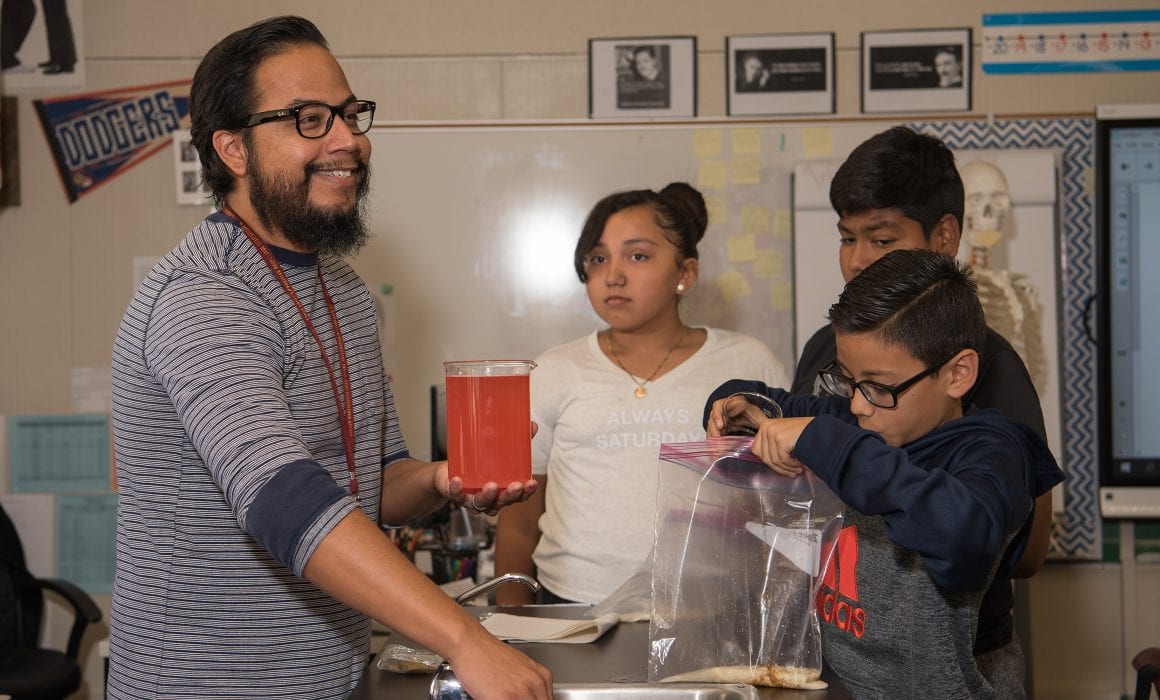
Sixth grade teacher Juan Padilla works with students on a hands-on experiment that simulates stomach digestion.
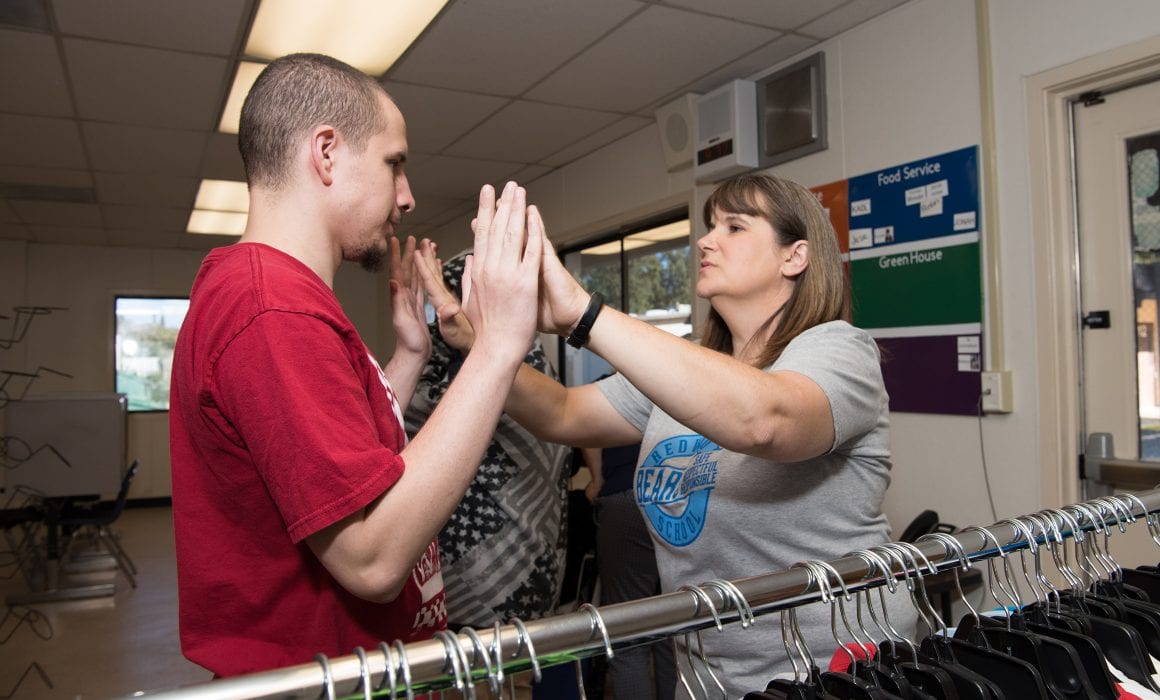
Special Education teacher Jennifer Barry guides her students in work and life skills in "The Den," a vocational training center.
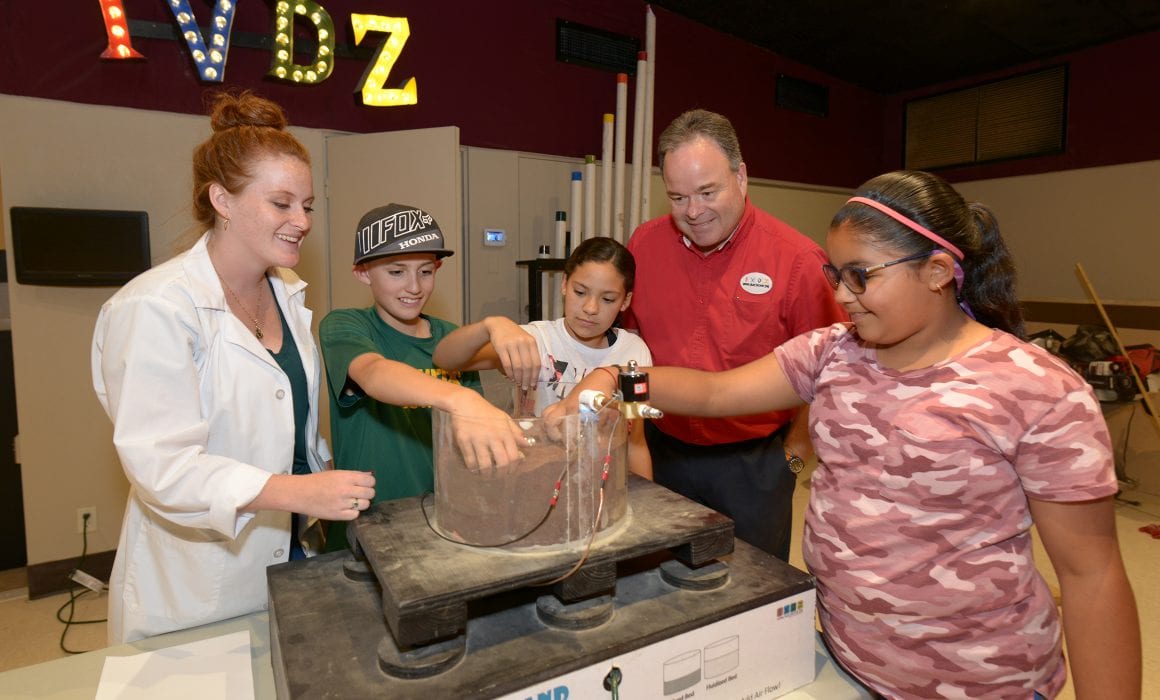
Teacher Daniel Gibbs and Dennis Gibbs (not pictured) set a STEM career path with their "Imperial Valley Discovery Zone," a unique science center for students.
Programs
The CTA Institute for Teaching is dedicated to supporting strength-based teaching and learning. Central to this is an equity-based model designed to support teacher-driven initiatives. Teachers are extremely valuable to educating our students, increasing the quality of our schools, and advancing our public educational system. The IFT is dedicated to supporting educators in developing, leading, and implementing quality programs and initiatives in their schools, districts, and school communities.
The $5,000-$20,000 strength-based grants are designed for PK – 12 teachers and certificated support staff, ESP members and college instructors. Proposals are reviewed through the lens of IFT’s strength-based equity matrix by an IFT Grant Selection committee composed of outstanding teachers. To date, CTA members have funded 501 grants totaling over $5.8 million.
We project this event will be back in 2024.
The Expo, presented as part of the pre-Good Teaching Conferences, is a showcase of exemplary IFT Grants. Grantees present their strength-based projects from a wide variety of grade levels, geographic areas, size and student demographics. The Expo provides an opportunity for educators to share projects and practices, engage with fellow educators, and build their capacity to innovate.
IFT supports home visits to build strong home-to-school connections between parents and teachers. IFT supports the Parent-Teacher Home Visit project towards increasing positive student-teacher-parent outcomes. Families, teachers, and students benefit when strong relations are built across the school and home environments, leading to a higher potential of increasing student success.
IFT Board of Directors and Staff Support
E. Toby Boyd
David B. Goldberg
Leslie S. Littman
Mike Patterson
Kisha Borden
Jess Sanchez
Angela Stegall
Marisa Cooper
Glen Price
Joe Boyd
Wei Pan
Becky Zoglman
Emily Gordon
Dr. Norma Sanchez
Anna Dilig
Chandra McPeters
Dr. Stacy Begin, CSO Liaison
BoMee Musetti
Talia Benson
Contact IFT: ift@cta.org